

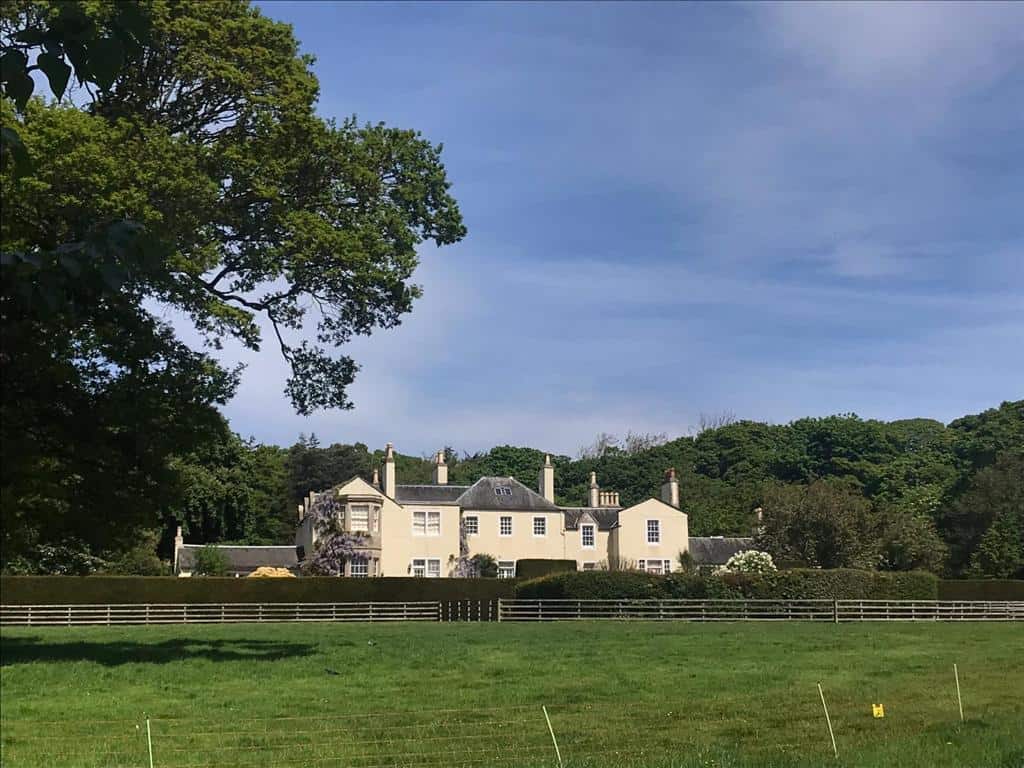
This Category B listed property, originally built in 1770 and later enhanced, stands as a testament to the architectural grandeur of a bygone era. The current owners have undertaken the profound responsibility of ensuring the energy efficiency of this historical masterpiece for the benefit of future generations.
Willie Watt, the owner, emphasised their commitment to sustainability and environmental responsibility when he stated,
“If you live in a historical property like that, you have a duty to try to make it as efficient as possible. We, as a family, are committed to sustainability and the journey to net zero, so for all these reasons, we wanted a fuel-efficient heating system with minimal carbon footprint. I think it is future-proofing it, and in 5-10 years, it will be more challenging to sell traditional houses like this if they are not energy-efficient.”
To fulfil their vision, the owners enlisted the expertise of Locogen, an independent consultancy firm specialising in renewable technologies. Locogen’s task was to assess the site, explore various technologies, and provide tailored recommendations for the property, which included a solar array and a heat pump system.
Initially, a ground source heat pump was considered, and test boreholes were dug on-site. However, it became evident that the bedrock’s heat conductivity was insufficient, necessitating 6 or 7 boreholes, making the ground source heat pump financially unviable. Subsequently, the focus shifted to air source heat pumps.
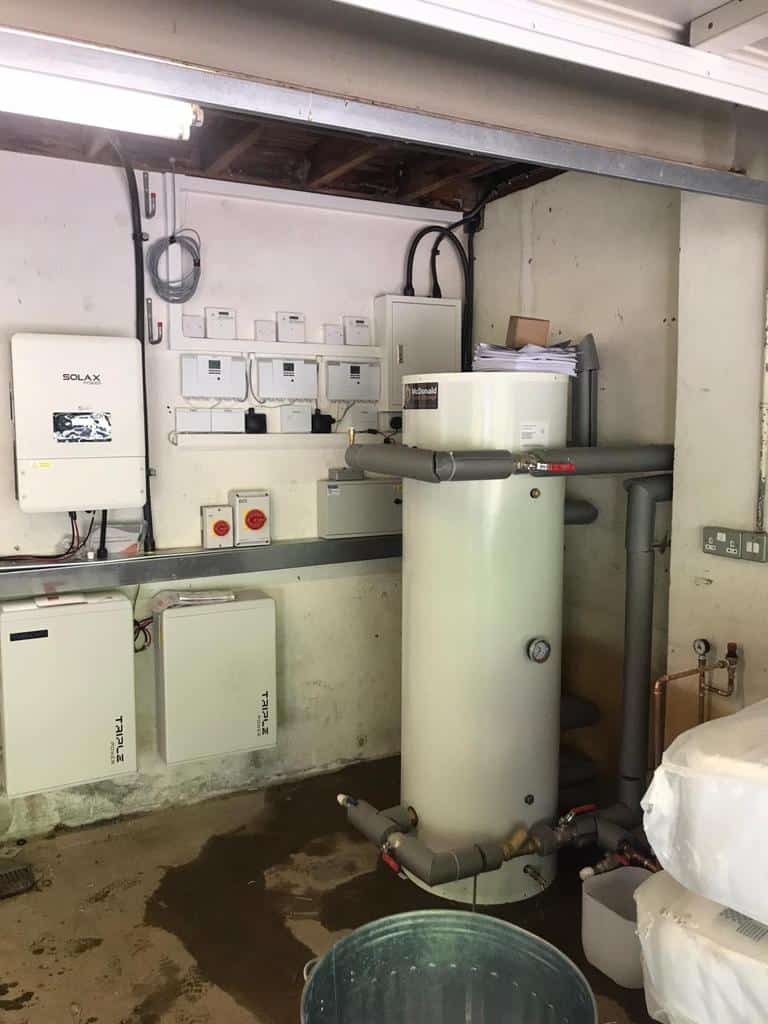
The stringent regulations governing the preservation of listed properties presented additional challenges, such as the preservation of the existing column radiators. This necessitated the development of a hybrid heating system that seamlessly integrated with the current oil boiler and heating infrastructure. Locogen obtained multiple quotes for the design and installation, ultimately choosing IMS Heat Pumps as their installation partner.
Rupam Bulbul from Locogen explained the selection process, stating,
“Our role was to go out on behalf of the client and get quotes, we received a few back, and obviously, the chosen ones were yourselves. The client really liked the initial interaction with Dominic, who took the time to come out to the site and explain everything to the client. Rupam Bulbul from Locogen had worked with IMS in a previous role, so he knew exactly how we work and how professional we were, which also helped the client pick IMS as their preferred installation partner.”
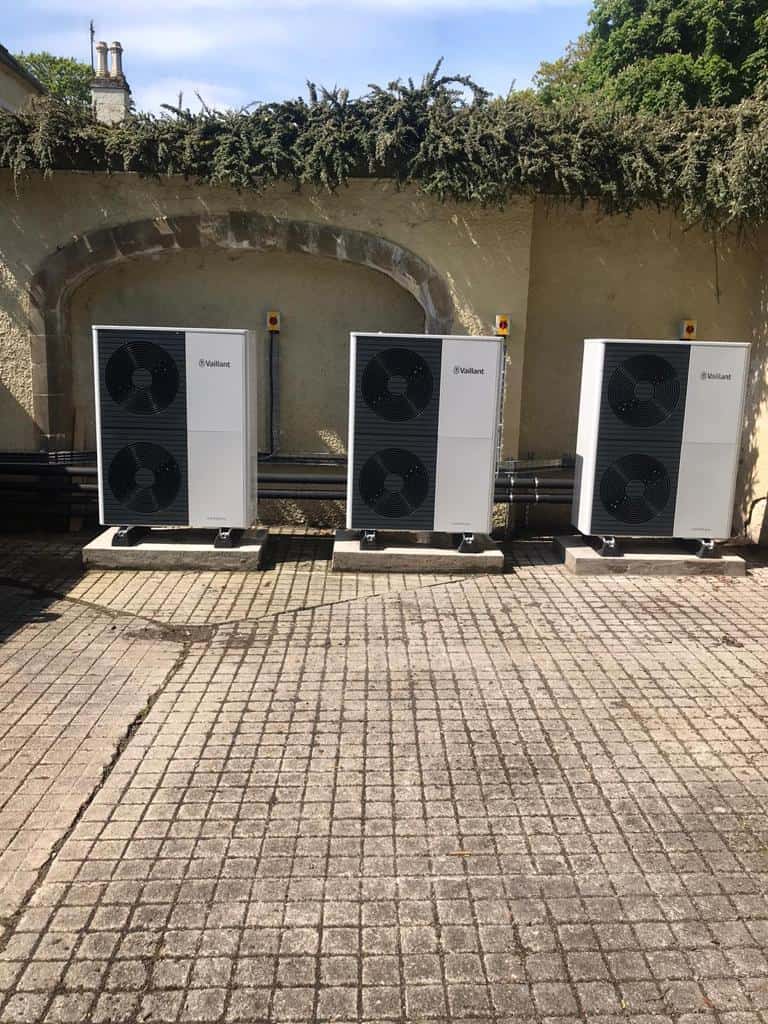
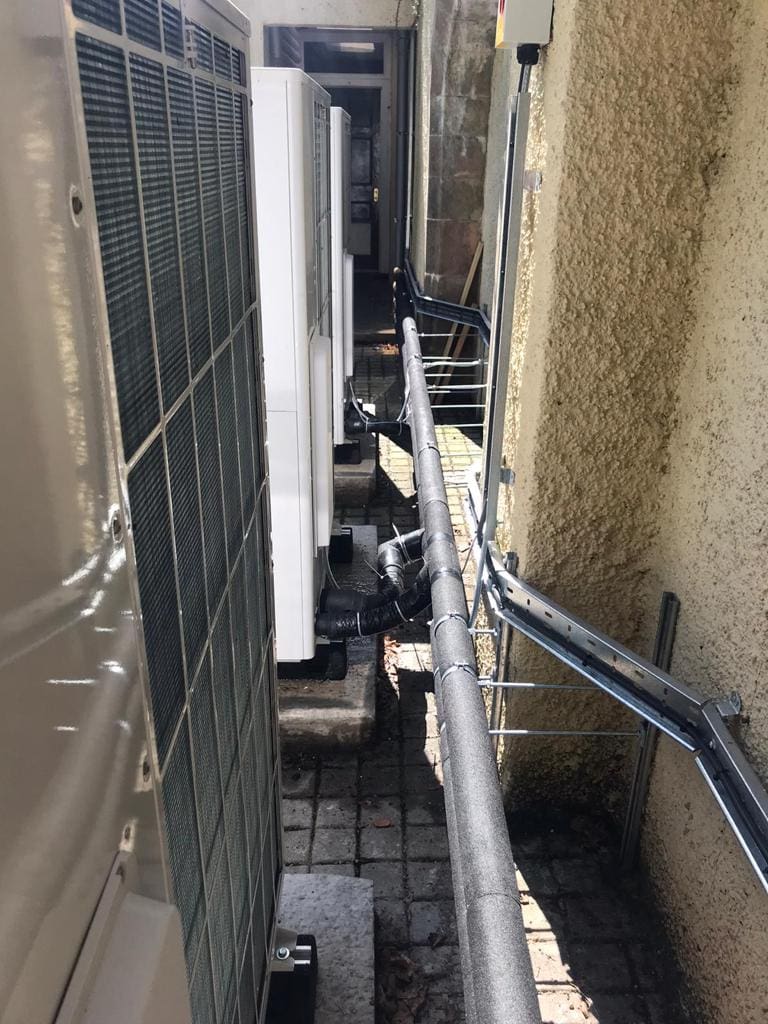
To address the unique challenges posed by the project, we designed a bespoke hybrid heating solution. We installed three Vaillant A+12kW heat pumps, operating in a cascade system. This setup, in conjunction with the existing oil boiler for hot water, ensured a smooth transition to the new heating system. Willie, the owner, acknowledged the technical aspects of the project, saying,
“It’s quite technical, and we’re not particularly technical, so the guys took time to explain it all to us, which helped.”
Throughout the installation process, clear communication was key. The Project Manager from IMS Heat Pumps ensured that all stakeholders were informed about the project’s progress and any potential delays. This level of professionalism played a crucial role in the project’s success. Rupam commented,
“From start to finish, it’s been a good experience. Everyone was kept up to date, especially if I ever needed to chase anything. Steve would either call or email to let me know there would be a delay, so everyone knew when IMS would be on-site, and no one was left wondering when we were going to come back.”
When reflecting on their experience, the owner acknowledged the efficiency and professionalism displayed by IMS Heat Pumps in delivering a solution tailored to their unique needs, saying,
“The installation was very efficient, and the team from IMS did a good job. And so far, it’s been working really well, and the amount of oil we’re using is massively reduced.”
The transition to a hybrid heating system represents more than just an upgrade; it symbolises a commitment to a sustainable future. It preserves the historical significance of this architectural masterpiece while contributing to a greener world.