
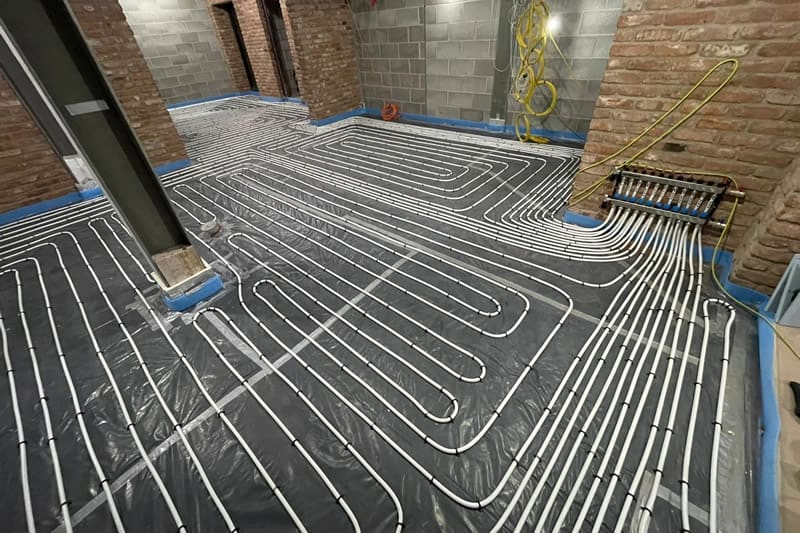
During the summer of 2022 there was a change to building regulations for underfloor heating (UFH) systems which in many cases form part of a renewable energy system combined with a heat pump. Part L of UK Building Regulations changed to specify maximum heating system flow temperatures of 55°C whenever a new heating system is fitted or when an older system is removed and upgraded. UFH has been capable of delivering lower flow temperature rates for some time compared to more traditional heating systems (i.e. radiators) and this change finalises a specific standard. This change will look to guarantee even more efficiency from a UFH system.
To provide a home with warmth all year round across all seasons, a lower flow temperature system (as now required by the 2022 Part L building code changes) requires larger heat emitters with a much greater surface area. UFH turns floorspace into a giant heat emitter whilst traditional convection radiators are less likely to be able to provide the required heat outputs at these lower flow temperatures.
By choosing an underfloor heating system over radiators you should aim to get between 15% and 40% lower cost with less maintenance. Radiators are not likely to outlive the building compared to UFH which in some cases can now come with 75 year warranties. Convection radiators are expected to be replaced every 10 to 20 years depending on usage and manufacturing quality. Heat pump and UFH combined represent a fantastic solution for any new build or renovation project.
The Future Homes Standard will mean all new homes must be futureproofed with low carbon solutions, such as heat pumps, with the aim of reducing carbon emissions by 75-80% compared to new homes under the current regulations. The interim changes to Part L, which came into force in June 2022, aim to reduce carbon emissions by 31%.
We are not just heat pump experts, we are also underfloor heating experts.