
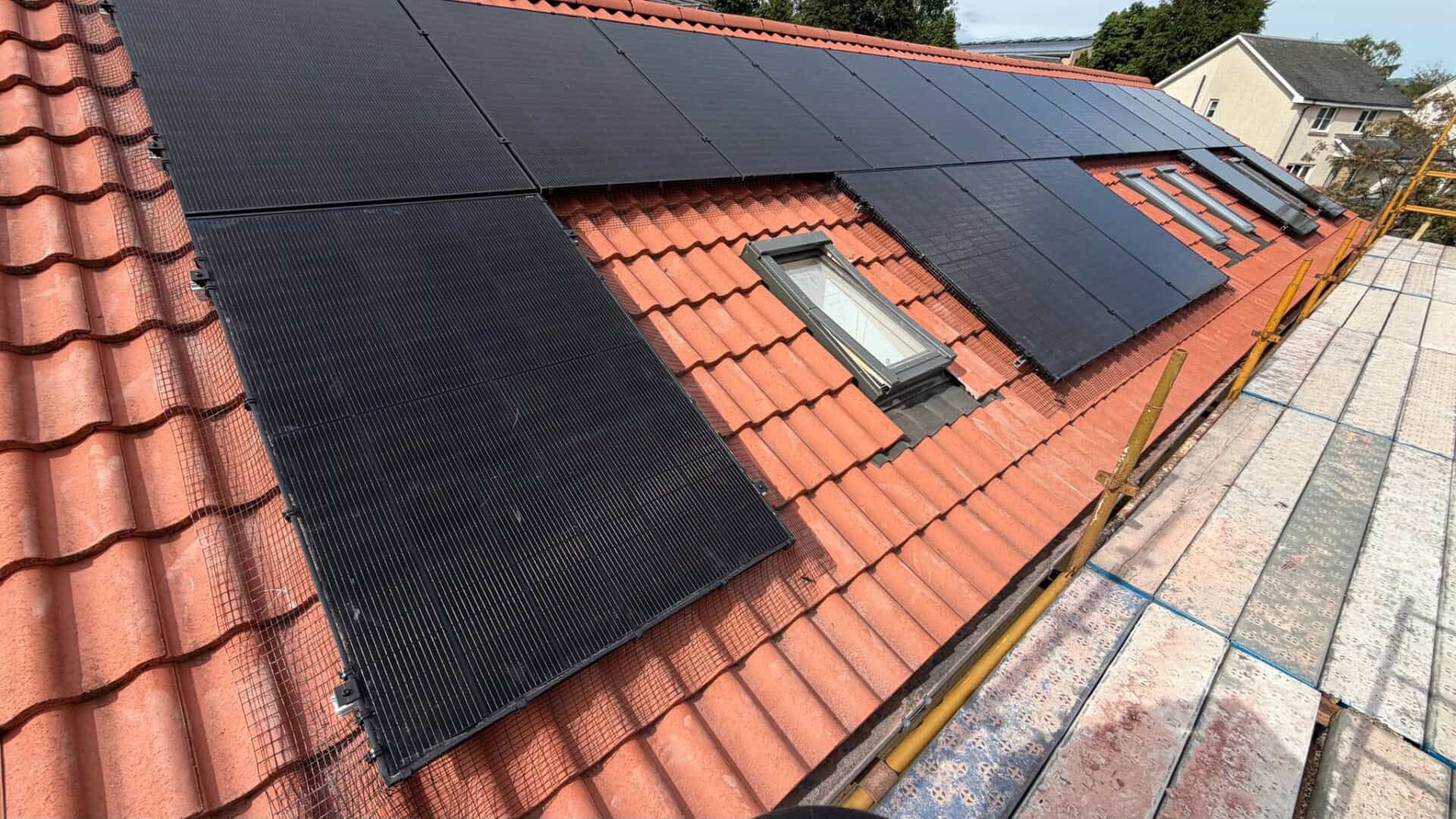
Plug-in solar panels are becoming increasingly popular in the UK. They offer an affordable way to generate some of your own electricity without the cost of a full rooftop solar installation.
But how do plug-in solar panels work, and how do they compare with an installed solar panel system?
Read on to find out.
How Do Plug-in Solar Panels Work?
Plug-in solar panels generate direct current (DC) electricity from sunlight, just like conventional solar panels. A microinverter converts DC electricity into alternating current (AC), the type of electricity used by appliances in your home.
The converted electricity is then fed into the home through a compliant mains connection. Appliances that are already running can use solar electricity first, reducing the amount of power you need to import from the grid.
Because plug-in systems are much smaller than a typical rooftop array, they are designed mainly to offset background daytime electricity use rather than power the whole house.
What Are Plug-in Solar Panels?
Plug-in solar (sometimes called balcony solar) is a small solar system, usually made up of one or two panels.
Rather than powering your entire home, it’s designed to reduce your home’s constant background electricity demand, including:
- Fridge and freezer
- Broadband router
- Laptop
- Television
- Phone chargers
- Home office equipment
It quietly reduces your electricity bill throughout the day, rather than replacing all your electricity use.
Plug-in Solar vs Rooftop Solar Panels: At a Glance
| Plug-in Solar Panels | Rooftop Solar PV | |
| Best for | Renters, flats, balconies | Homeowners with a suitable roof |
| Typical system size | Around 800W maximum output under the proposed UK framework | 3kW to 5kW+ |
| Typical cost | Hundreds of pounds | Several thousand pounds |
| Installation | Simple set-up* | Professionally installed |
| Battery compatible? | Not under the current UK plug-in solar framework | Yes |
| What it powers | Your home’s background electricity use | A significant proportion of your home’s electricity |
| Typical savings | Around £70 to £110 per year** | Often several hundred pounds per year** |
| Our verdict | A great way to get started | The best long-term investment for most homeowners |
Always follow the manufacturer’s instructions and only use products that comply with the relevant UK product, electrical and grid-connection requirements.
**Savings vary depending on your electricity use, tariff, location and how much of the electricity you use yourself. *
Plug-in Solar Panels or Rooftop Solar?
If you rent or live in a flat, plug-in solar panels can be an affordable way to generate electricity without making permanent changes to your home.
If you own your home and have a suitable roof, a rooftop solar panel system will usually generate significantly more electricity. Pairing solar with battery storage (& a heat pump) is likely to deliver much better long-term value.
The right choice depends on your:
- Property
- Budget
- Goals.
Who Should Choose Plug-in Solar Panels?
Plug-in solar panels aren’t trying to replace rooftop solar. They’re designed for different homes and different situations. They could be a good fit if you:
- Rent your home
- Live in a flat or apartment
- Have a balcony or small outdoor space
- Don’t have a suitable roof for solar panels
- Want an affordable way to start generating renewable electricity
For many, it’s the first opportunity they’ve had to benefit from solar power.
A plug-in system generates much less electricity than a rooftop solar installation. But it can still reduce the amount of electricity you buy from the grid during the day.
Who Should Choose Rooftop Solar Panels?
If you own your home and have a suitable roof, a professionally installed solar PV system will usually provide far greater long-term value.
Compared with plug-in solar panels, rooftop systems:
- Generate significantly more electricity.
- Can power a much larger proportion of your home’s annual electricity needs.
- Can be designed specifically for your property.
- Can be paired with battery storage.
- Often deliver much greater lifetime savings (in fact, the right combination of green upgrades could reduce energy bills by up to £1,800 a year.)
While the initial investment is higher, most homeowners will benefit from much greater energy generation over the life of the system.
Can Plug-in Solar Panels Power a Whole House?
In short, no.
Plug-in solar panels are designed to offset your home’s background electricity use rather than run everything at once.
A full rooftop solar PV system generates considerably more electricity and can supply a much larger proportion of your household’s annual energy needs.
If your goal is to reduce your dependence on the grid as much as possible, rooftop solar is usually the better choice.
Why Solar Battery Storage Makes an Even Bigger Difference
Generating electricity is only half the story.
Imagine your solar panels produce plenty of electricity on a sunny afternoon while you’re out at work.
Without a battery, much of that electricity may be exported back to the grid before you get home.
With solar battery storage, you can store that surplus electricity and use it later for cooking dinner, watching TV, running appliances or even charging an electric vehicle.
As a Tesla Premium Certified Installer, we can help you choose and fit a battery storage system designed to work seamlessly alongside solar.
That’s why many homeowners choose to install solar panels and battery storage together. It helps you use more of the electricity you’ve generated yourself, reducing the amount you need to buy from the grid later.
Plug-in battery storage is not included in the current UK plug-in solar framework. If you want to store the electricity your solar panels generate, a professionally installed rooftop solar and battery storage system remains the established option.
If you’re planning to own an electric vehicle, you make even better use of the electricity you generate at home by combining:
- Solar panels
- Home battery storage
- An EV charger.
Can You Start with Plug-in Solar and Upgrade Later?
Absolutely.
For many people, plug-in solar is the first step towards generating their own renewable electricity.
You can upgrade to a full rooftop solar panel system if you move to a home with a suitable roof or decide you want to generate more of your own power.
A larger system can generate significantly more electricity. It can also be paired with battery storage and a smart EV charger.
Upgrading your solar setup often fits naturally into a wider retrofit.
Are Plug-in Solar Panels Worth It? We Asked Our Electrical Qualifying Supervisor
We asked Mark Slater, Electrical Qualifying Supervisor at IMS Heat Pumps, what he would say if a customer asked whether plug-in solar panels are worth it.
“I’d say they can be, but only if your expectations are realistic. Plug-in solar systems are designed around a maximum output of around 800W, which is enough to offset some of your home’s background electricity demand during the day, but not enough to make the same impact on your overall energy consumption as a full rooftop system.
“A professionally designed rooftop solar system is usually several times larger, meaning it can generate far more electricity, integrate properly with battery storage and deliver much greater long-term savings.
“Plug-in solar has its place, particularly for renters or properties where rooftop solar isn’t an option, but if you own your home and want to maximise your savings, a full rooftop system is the better investment.”
Mark Slater, Electrical Qualifying Supervisor, IMS Heat Pumps
Frequently Asked Questions
Looking for more answers? Visit our Solar Panels and Battery Storage FAQs for advice on everything from planning permission and battery storage to Smart Export Guarantee (SEG) payments.
Are plug-in solar panels legal in the UK?
Not yet. The UK government has announced plans to enable compliant plug-in solar products and has published an interim product specification, but the new framework is not yet in force.
Until the regulatory changes commence, plug-in solar products cannot be lawfully sold and used in the same way as ordinary plug-in appliances.
When the rules take effect, only compliant products meeting the relevant UK safety and technical requirements will be permitted. See the UK government plug-in solar consultation and response for the latest position.
Will plug-in solar panels power my whole house?
No.
Plug-in solar is designed to reduce your home’s background electricity use rather than power everything at once.
A rooftop solar PV system generates considerably more electricity and can meet a much larger proportion of your household’s annual electricity needs.
Can I install plug-in solar panels if I rent?
Potentially, yes.
One of the biggest advantages of plug-in solar is that it gives renters another way to generate renewable electricity.
However, you should always check your tenancy agreement and any building management rules before installing equipment.
Are plug-in solar panels worth it?
They can be, depending on your home and your expectations.
If you rent, live in a flat or simply want an affordable introduction to solar, they can be a great option.
If you own your home and have a suitable roof, however, you’ll usually get much greater long-term value from a professionally installed rooftop solar PV system.