
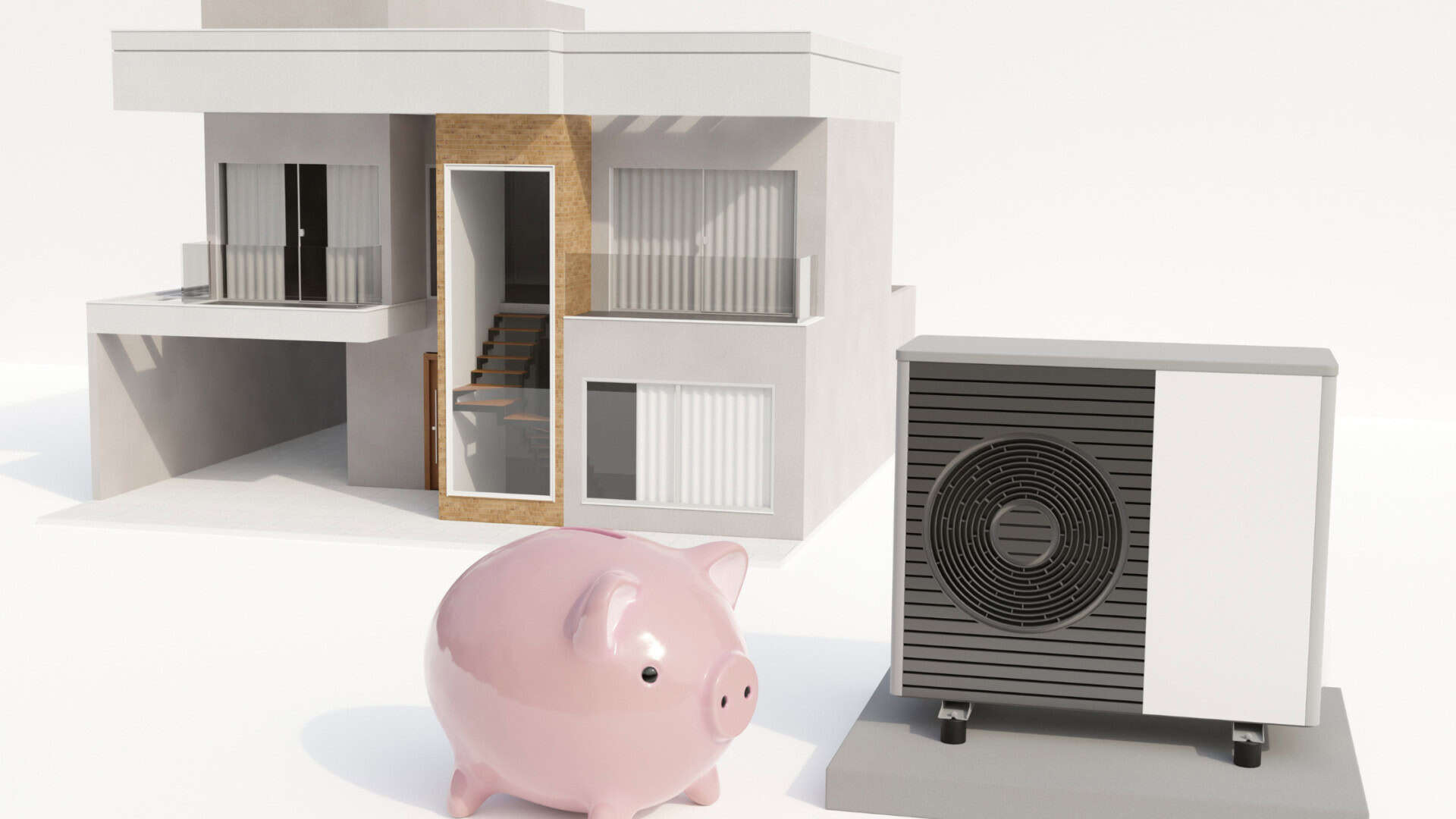
Heat pumps can deliver up to 400% efficiency on energy costs.
This can slashes both your carbon footprint and fuel costs by more than half.
With government funding options of up to £7,500 still available, there’s never been a better time to make the switch from gas or oil boilers.
In this post, we’ll break down exactly how heat pumps achieve these savings.
And what you need to know before installing one.
Heat pumps: An overview
Heat pumps are energy systems that provide a renewable heating source.
They don’t use fossil fuels like gas and oil boilers. Instead, they collect warmth from air, soil, rocks and water, which convert into warmth.
(Read more about how heat pumps work here.)
Three main types of heat pumps are available.

Ground-source heat pumps (GSHPs)
A ground-source heat pump uses the earth’s natural temperatures to collect heat and transport it into your home using a ground loop system.
This reduces your energy bills and means you can benefit from a reliable heating system.
However, installing a horizontal ground-source heat pump system requires a large outdoor space or the budget to dig vertical boreholes.
Air-source heat pumps (ASHPs)
If you have less space and a lower budget, an air-source heat pump can accommodate your needs and provide ongoing heating.
ASHPs work by collecting heat from the air and using a reverse refrigeration cycle to transport it into your home.
These systems are ultra-compact and suitable for smaller homes or terraced properties with limited exterior space.
Water source heat pumps
Water-source heat pumps aren’t a popular option. This is because to work they require access (and permission) to a natural water supply, such as a:
- Pond
- Lake
- River.
Heat pump vs fossil fuel heating efficiency ratings
When it comes to energy savings, a heating system’s efficiency rating is the most important factor to consider.
A heat pump is more efficient than a traditional heating system like a gas or oil boiler because it doesn’t burn fossil fuels.
While a traditional gas boiler has an average efficiency rating of 90%, heat pumps far exceed this, with average ratings ranging from 300% to 400%.
In other words, every unit of energy a traditional boiler consumes will offer an output of up to 0.90. Your heat pump can generate three to four units of heat for each unit of electricity it consumes.
Let’s take a look at the average efficiency ratings for each system.
| Heating System | Average Efficiency Rating | Operating Mechanism | Energy Output per Unit of Energy Input |
|---|---|---|---|
| Air Source Heat Pump | 300–400% (or COP 3.0–4.0) | Collects heat from the air and transfers it into your home. Requires electricity | Generates 3–4 units of heat per unit of electricity |
| Ground Source Heat Pump | 350–450% (or COP 3.5–4.5) | Uses heat from the ground and transfers it into your home through a pipework system. | Generates 3.5–4.5 units of heat per unit of electricity |
| Modern Gas Boiler | Around 90% for a condensing model | Burns natural gas to produce heat | 0.9 units of heat per 1 unit of gas |
| Modern Oil Boiler | Around 85–90% for a condensing model | Burns heating oil to produce heat | 0.85–0.9 units of heat per 1 unit of oil |
| Old Oil/Gas Boiler | 60–80% (non-condensing model) | Less efficient combustion and heat recovery | 0.6–0.8 units of heat per 1 unit of fuel |
Heat pump vs traditional heating system costs
Heat pump vs boiler installations
The initial cost compared to gas and oil boilers can put people off of installing a heat pump.
However, grants are available to offset these expenses and ensure you can save money.
For example, the Boiler Upgrade Scheme offers up to £7,500 toward the cost of installation, which can reduce your spend.
Homes in Scotland can also take advantage of the Home Energy Grant and Loan.
Here are the average costs of installing a heat pump unit versus oil and gas boilers.
| Heating System | Average Costs Including Installation | Costs Including the Boiler Upgrade Scheme |
| Air-Source Heat Pump | £5,000 to £14,000 | Up to £7,500 |
| Ground-Source Heat Pump | £15,000 to £37,000 | £7,500 to £29,500 |
| Gas Combi Boiler | £1,500 to £6,000 | N/A |
| Oil Combi Boiler | £1,000 to £5,000 | N/A |
Average energy bills
A heat pump uses electricity, which is more expensive than the gas standing charge.
However, we must also consider their efficiency rating and the initiatives to support green energy installations.
Heat pump owners can look forward to low-cost tariffs from energy companies, ensuring savings on their electricity bills. The amount you spend depends on your home’s heat demand and whether it has sufficient insulation.
For example, homes with poor insulation will waste heat. So, the heat pump must work harder. That said, the average running costs are as follows:
- Air-Source Heat Pump: £863.34
- Modern Gas Boiler: £893.14
- Older Boilers: £1148
It’s also important to remember that pairing heat pumps with solar panels and batteries can significantly reduce your energy bills.
Upgrade to a heat pump
The amount of energy you save with a heat pump compared to other heating systems ultimately depends on:
- The type and model of heat pump you install
- Whether you plan to use it for general warmth or a hot water supply
- Who your installer is.
Reviewing different providers and tariffs can help you further reduce your energy prices and enjoy greater savings on your heating bills.
If you’re ready to ditch your gas supply and commit to a greener future, IMS Heat Pumps is here to help.
Contact us today for a free quote. We’ll assess your home’s current energy use and recommend the right heat pump for your needs.