

Answer: Yes, but it isn’t always carbon-neutral. Geothermal heat is renewable, and ground source heat is renewable. But heat pump systems aren’t inherently carbon-neutral, because they need electricity to operate. If this electricity is generated from a renewable source such as solar or wind, then you can consider the whole system as renewable and carbon-neutral.
Please continue reading for more details…
Renewable heat and geothermal energy
The most important thing to note here, as we outlined in our article about how much geothermal heating costs in the UK, is that geothermal heating and ground source heating are not the same. This confusion arises from different use of terminology in Europe and the USA, but also lots of common misconceptions about how each technology works.
Geothermal heat originates in the core of the earth. In Britain, this means drilling to significant depths of between 500 metres to 2,500 metres in order to acquire the appropriate heat. By and large, these systems are not suitable for domestic purposes, due to their cost and complexity.
In other countries with more active geology (such as Iceland), a geothermal heating system is more feasible and can be done at much shallower depths using hot springs, geysers, and the like. However, in the UK geothermal systems are less common and not something we see very often at IMS Heat Pumps. You’re more likely to need a ground source heat pump.
Ground source heat pumps are very different to geothermal heating systems. Whilst we have the choice of deep boreholes or shallower trenches, the aim of a GSHP is to use heat from the sun which is absorbed in the ground. Even vertical systems (with boreholes) do not get to the depths that a geothermal system would reach: a maximum of 200 metres is sufficient.
Horizontal systems (with trenches) are much shallower, and spread over a larger area. These are more popular in the UK, due to the lower cost of installation. However, you need more space to install these systems. In both the vertical and horizontal GSHP types, the heat is sourced indirectly from the sun’s power, rather than from the earth’s core.
Is my ground source heat pump (GSHP) renewable?
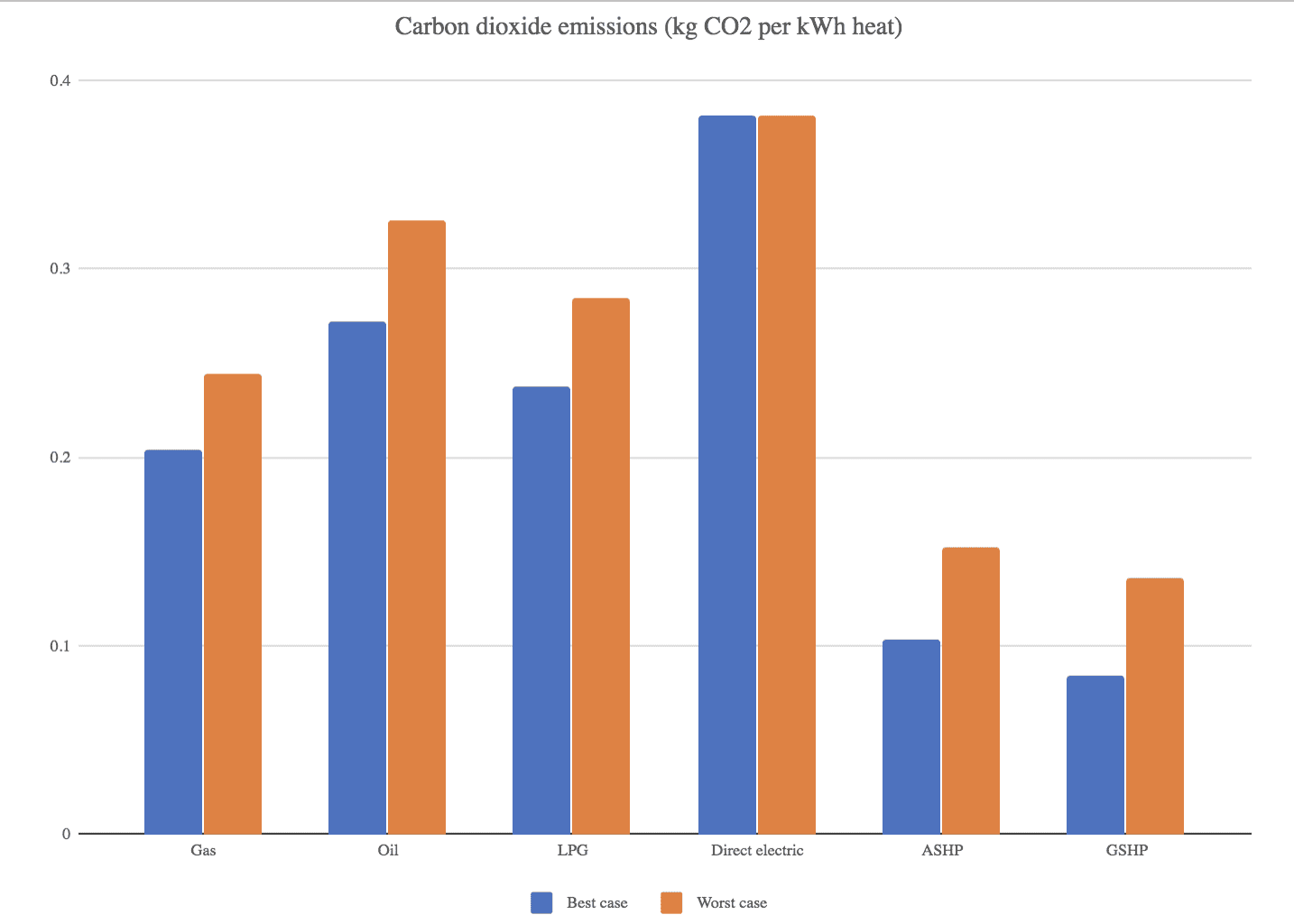
A ground source heat pump uses low-grade heat absorbed from the ground, which originates from the sun’s power. This is a carbon-free renewable heat source. However, ground source (and air source, for that matter) heat pumps need some electricity to operate. If this electricity is pulled from the national grid powered by fossil fuels, you cannot say that a ground source heat pump is fully carbon-neutral, even if the system officially qualifies as renewable in the eyes of Ofgem and government authorities.
Ofgem states that any heat pump commissioned after 25 March 2016 must be ErP compliant, achieving a minimum Seasonal Performance Factor of 2.5 using the SCOP calculator. This is the only way to acquire MCS certification, which is key to become eligible for the Renewable Heat Incentive (RHI) scheme. Technically, this approves the system as renewable.
However, with fossil fuel powered electricity, there is still a carbon impact. But there are ways to make your ground source heat pump totally green. The most obvious way is to switch to a renewable electricity provider. In the UK, there are lots of new suppliers entering the market, and you have a wide selection to choose from.
Alternatively, you can install solar PV at your property to generate your own electricity. This would allow you to feed any excess electricity back into the national grid and benefit from tariffs paid by the UK government – in addition to the RHI payments for the heat pump.
Also read: Air source heat pump grants in the UK
In summary…
Geothermal heat is renewable in itself, but the system in total isn’t necessarily totally green if the required electricity is powered by fossil fuel. In any case, geothermal heating in the UK is likely to be referring to ground source heating. It is the same conclusion, regardless…
The consistent low-grade heat stored in the ground is renewable, but the GSHP system itself must be powered by renewables in order to remove your carbon emission output entirely. You can achieve this by selecting a renewable energy provider or installing solar or wind tech.
Are you considering a heat pump? Speak to one of our advisors today. Our experts will explain the whole process for you, and provide estimations for costs, savings, and cash earnings via the Renewable Heat Incentive (RHI).