

The Property
At IMS Heat Pumps, we believe every home deserves its own solution.
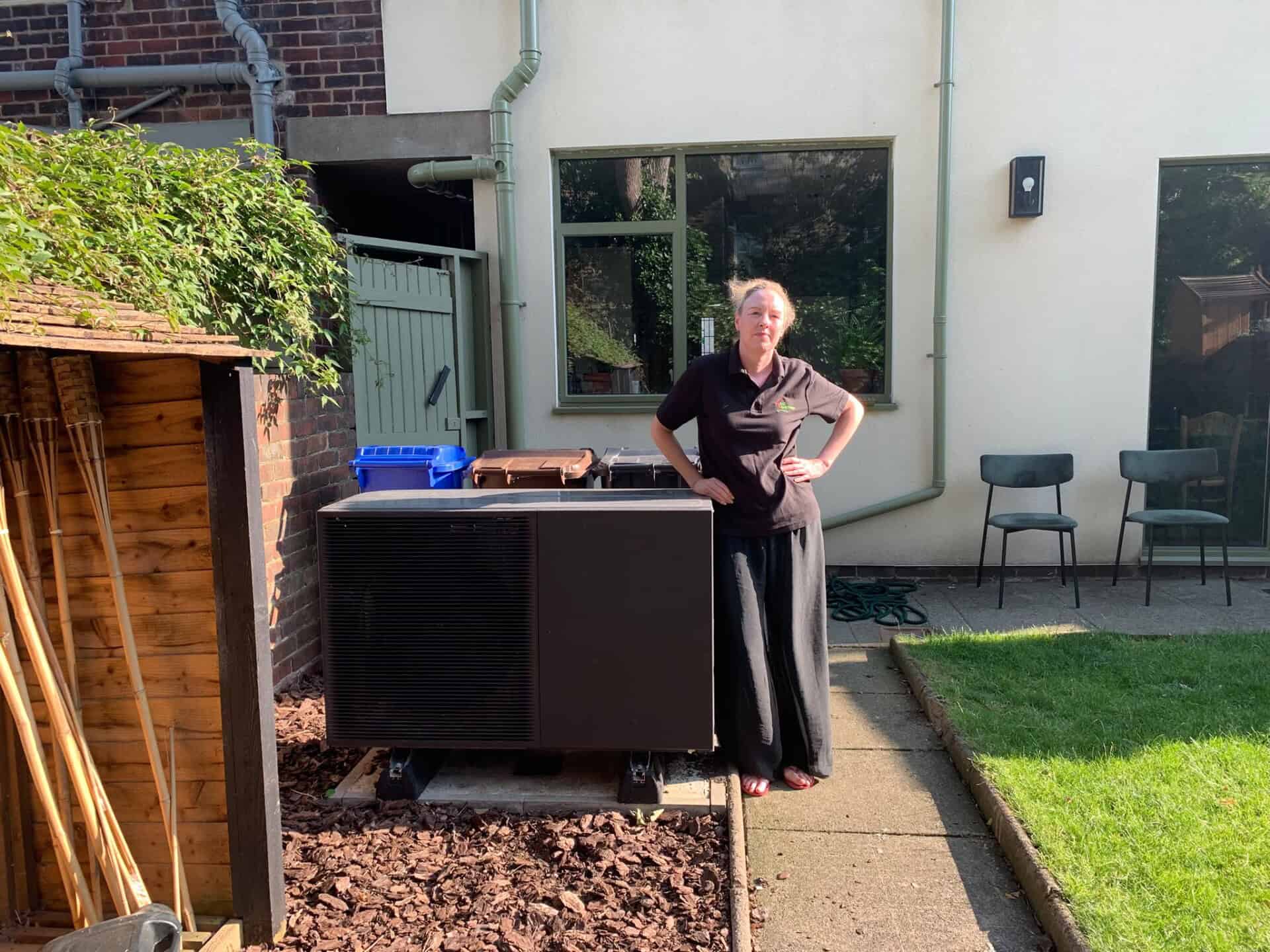
As Managing Director, Emma has spent over 20 years helping customers make the switch to low-carbon heating, explaining why heat loss calculations, system design and commissioning matter just as much as the heat pump itself.
Replacing the heating system in her own home gave her the opportunity to experience exactly what our customers do.
This wasn’t a demonstration project or a showroom installation. It was simply the heating system Emma chose for her own family home.
The Challenge
Like many older properties, Emma’s 1910 mid-terrace home presented a number of challenges.
Initial heat loss calculations suggested a fairly conventional heat pump retrofit. Every radiator would need replacing, additional emitters would be required, pipework would need altering and floors lifted throughout much of the property. Radiator upgrades alone were estimated at between £7,000 and £8,000 before joinery, floor reinstatement and decorating were even considered.
For many homeowners, that level of disruption would be enough to put the project on hold.
Around eight years earlier, Emma and her husband had completely renovated the property, investing in beautiful solid oak flooring throughout much of the ground floor. It had been a significant investment and they weren’t prepared to undo all that hard work simply to install a new heating system.
Rather than accepting the first design as the only solution, the team asked a different question: What actually needs replacing?
A Different Approach
Good retrofit isn’t about making the house fit the heating system. It’s about designing the heating system to fit the house.
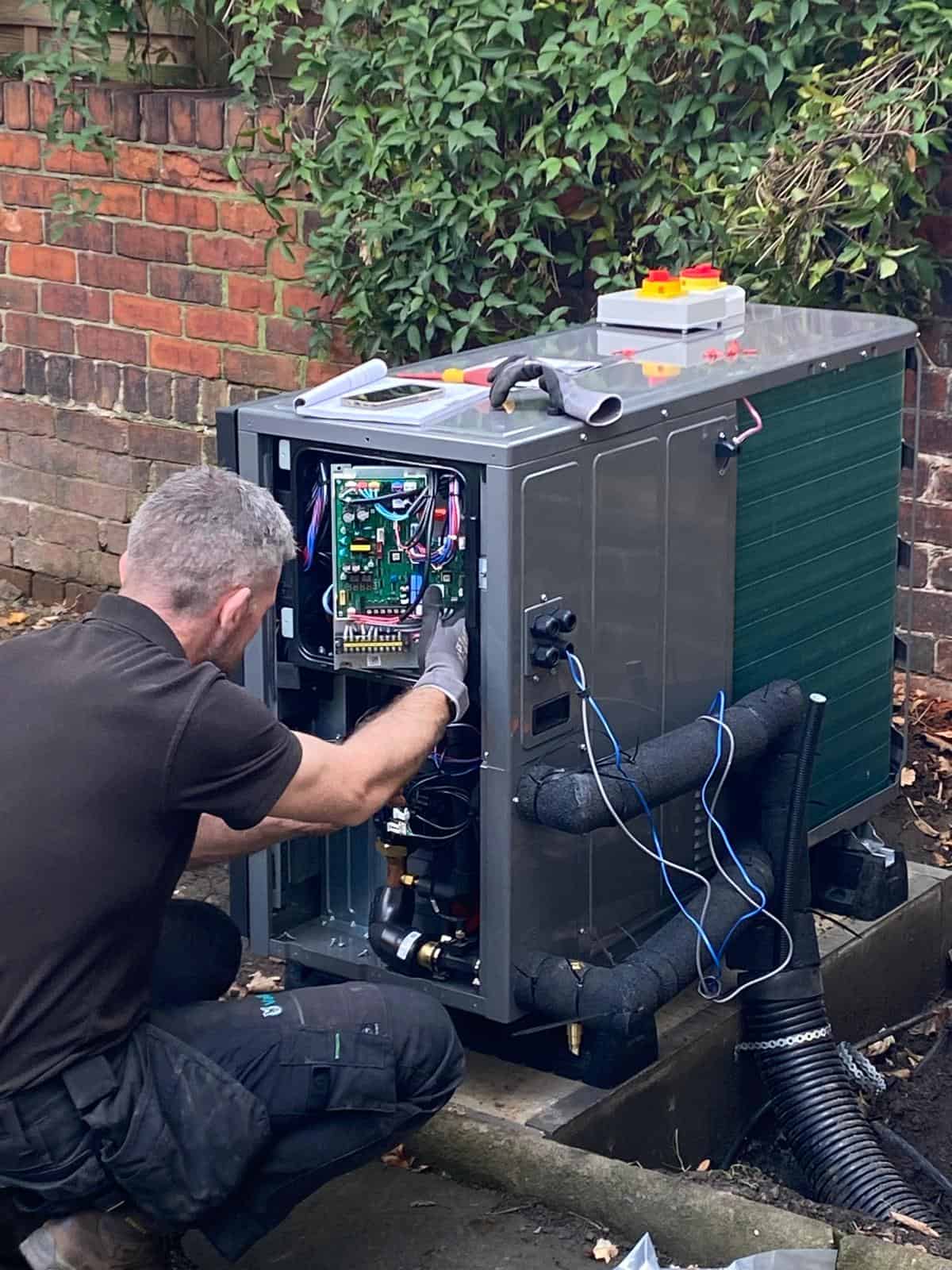
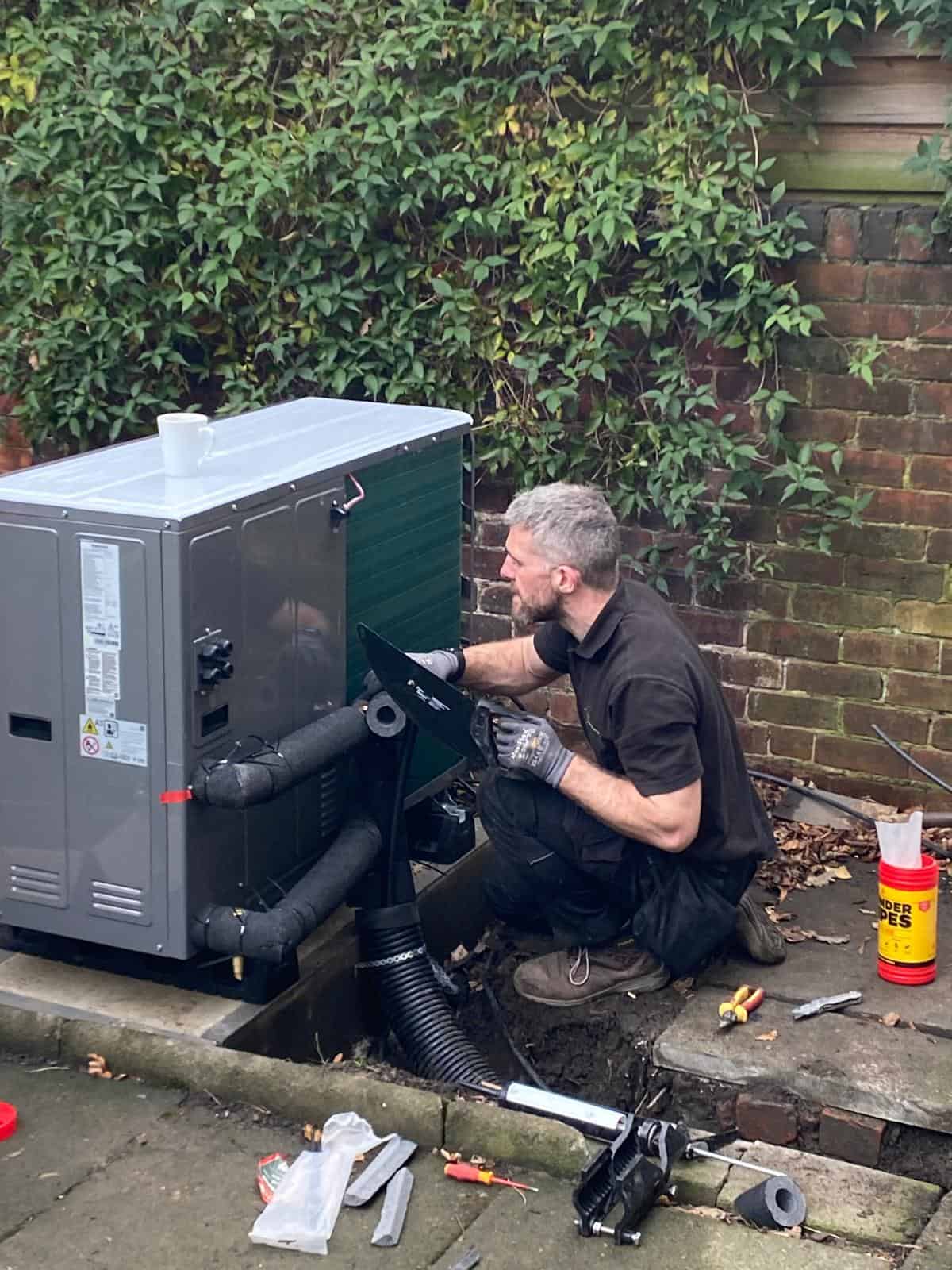
With detailed room-by-room heat loss calculations, careful assessment of the existing heating system and a focus on real-world performance rather than assumptions, a completely different solution emerged.
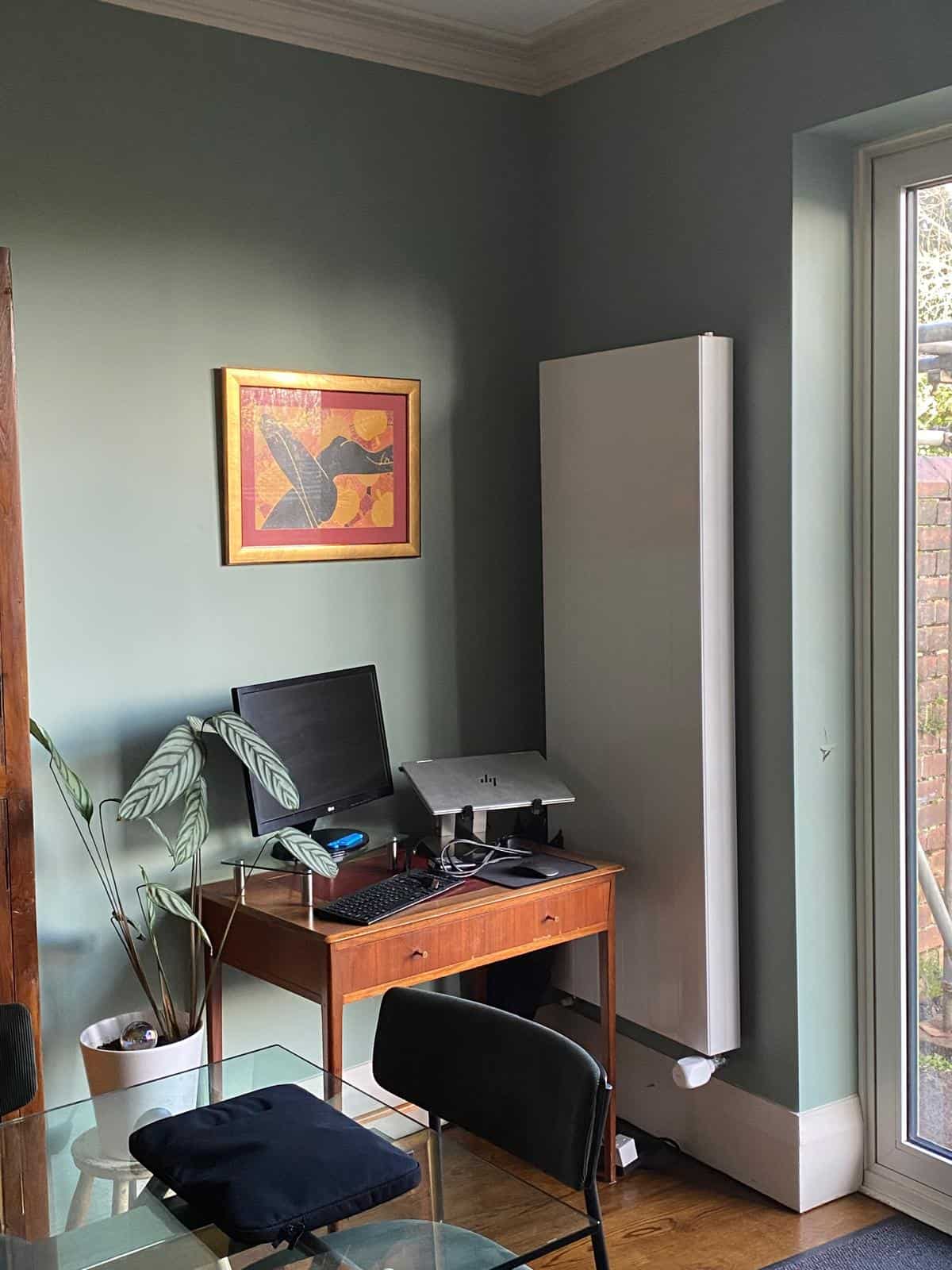
Instead of replacing every radiator, only three needed upgrading: the kitchen, dining room and hallway, where the existing radiators had already been identified as underperforming with the previous gas boiler. The remainder of the heating system could stay exactly as it was.
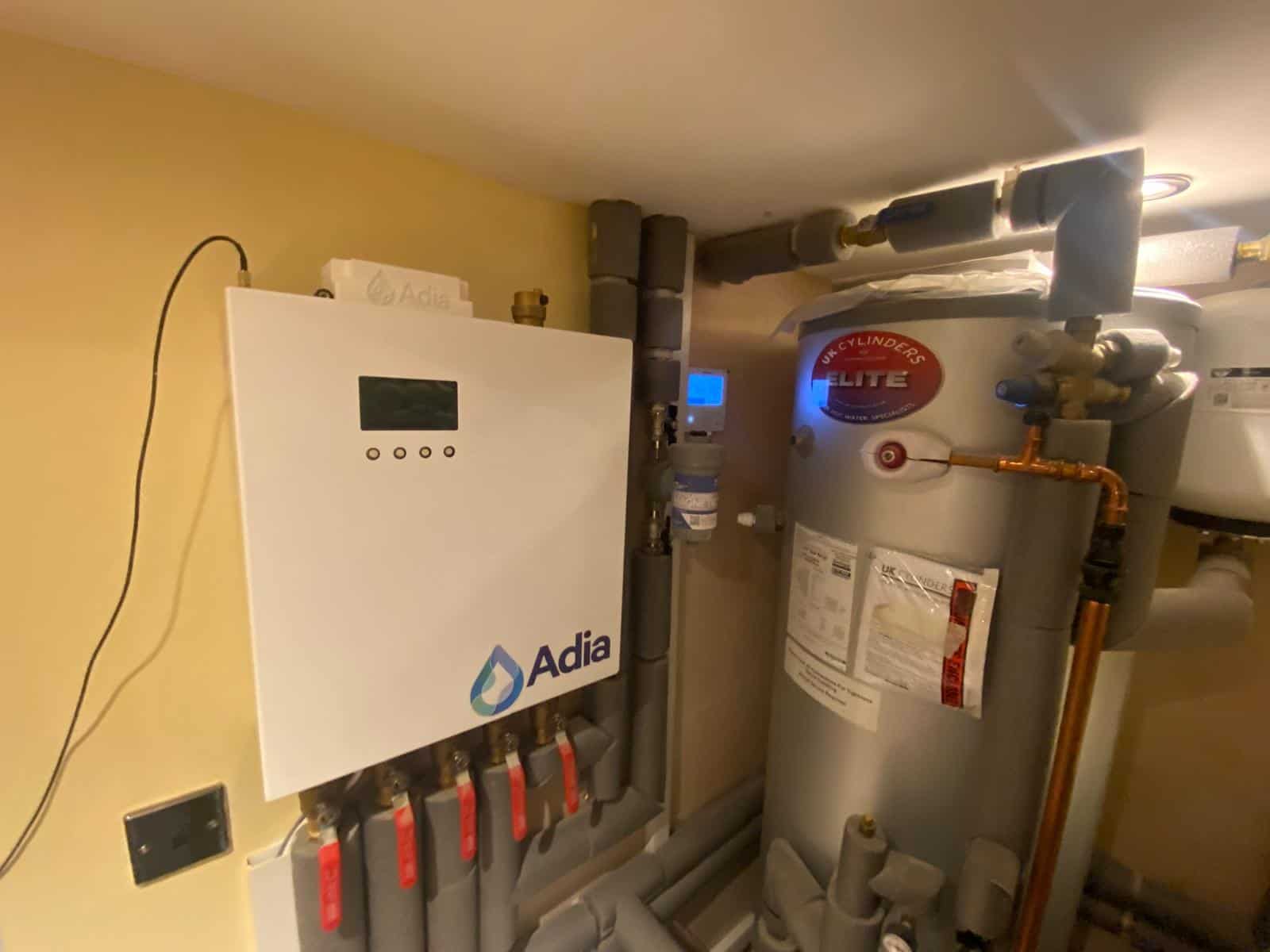
The system was paired with Adia intelligent hydraulic balancing, helping to optimise heat distribution throughout the home and allowing the heat pump to perform efficiently without widespread alterations.
By taking this approach, the team avoided unnecessary disruption, reduced installation costs and preserved the original character of the home, including those carefully restored oak floors.
Living with the Heat Pump
The real test of any heating system begins once the installers have left.
Emma wanted to understand how the system would perform under normal family living conditions, not under carefully controlled test scenarios. There were no special electricity tariffs, no changes to the family’s daily routine and no constant tweaking of settings to chase impressive efficiency figures.
The aim was simple: live with the system exactly as any homeowner would.
The results have reinforced everything we tell our customers.
The kitchen and dining room, previously the coldest rooms in the house, are now consistently warm and comfortable. The heating quietly gets on with its job, providing reliable heating and hot water without requiring constant attention.
Monitored performance also showed annual heating and hot water costs remained broadly comparable with the previous gas boiler, demonstrating that a carefully designed heat pump can provide low-carbon heating without dramatically increasing running costs.
Award-Winning Design
In 2026, the project was recognised with the National ACR & Heat Pump Award for Domestic Air-to-Water Heat Pump Project of the Year.
The judges recognised more than just the finished installation. They recognised a different way of approaching retrofit, one that challenged the assumption that every radiator must be replaced and every floor lifted to achieve a successful heat pump installation.
Instead, the project demonstrated how careful design, intelligent controls and evidence-led decision making can reduce disruption while still delivering excellent comfort and performance.
It’s an approach that reflects how we design every heat pump installation here at IMS Heat Pumps.
Real Homes. Real Evidence.
As someone who works in heat pump installation every day, Emma wanted to put the same design principles into practice in her own home.
“We wanted a system that worked for normal family life, including high comfort expectations and plenty of hot water demand, without major upheaval. This project has given us valuable real-world evidence that helps us offer customers more practical retrofit options with greater confidence.”
Living with the system has provided valuable insight, not only into the technology itself, but into the homeowner experience. That real-world understanding continues to shape the advice we give our customers today.
Could a Heat Pump Work in Your Home?
Every property is different, which is why we don’t believe in one-size-fits-all solutions.
Whether you live in a Victorian terrace, a modern family home or something in between, we’ll take the time to understand your property, carry out a detailed heat loss assessment and design a system that’s tailored to your home and your lifestyle.
If you’re wondering whether a heat pump could work for you, get in touch for a chat about your project.