
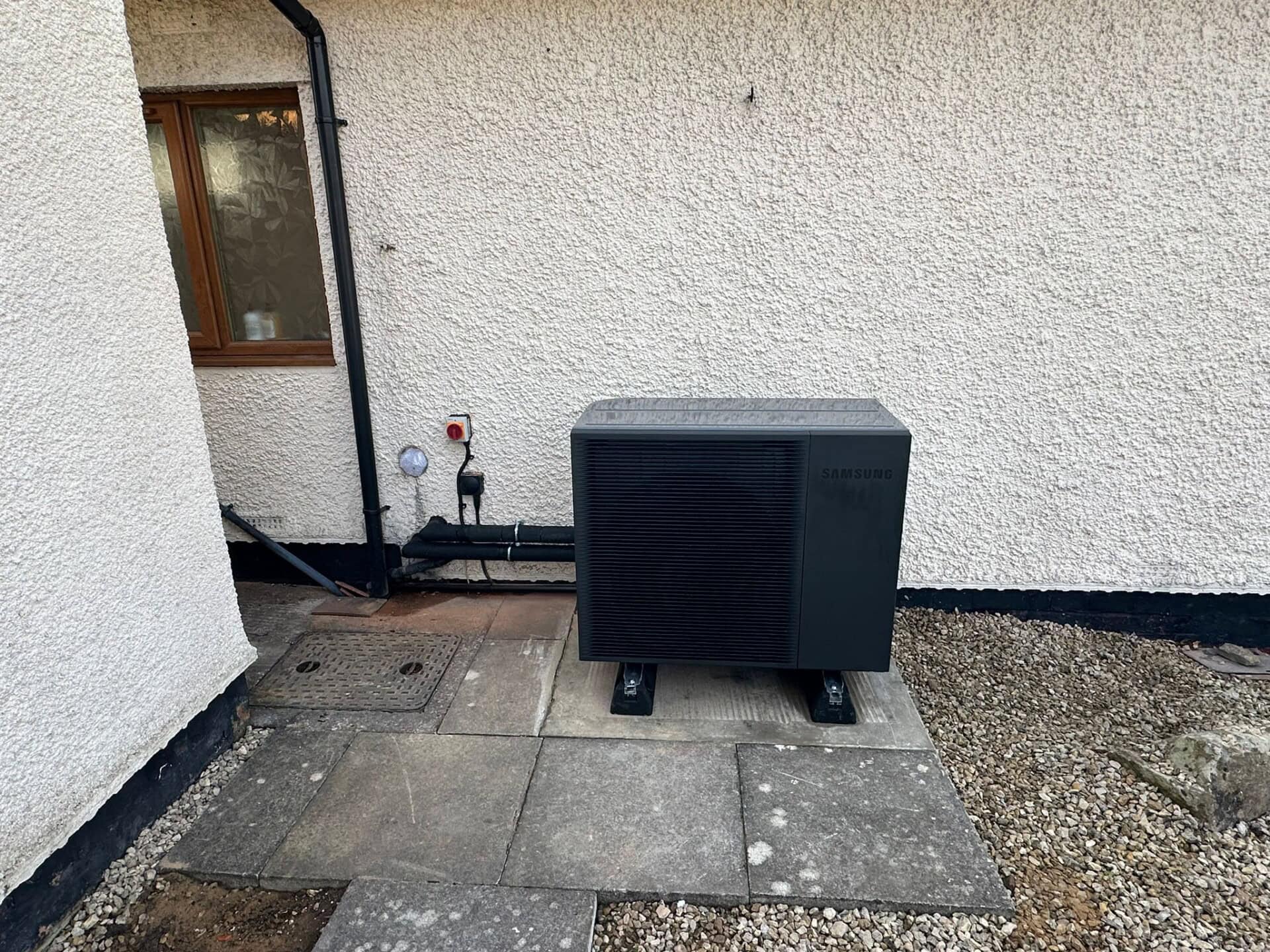
There are several common myths and misconceptions about heat pumps.
At IMS Heat Pumps, we’ve been installing heat pumps for over 26 years, so we’ve heard it all!
In this blog, we’re busting the myths we most often come across.
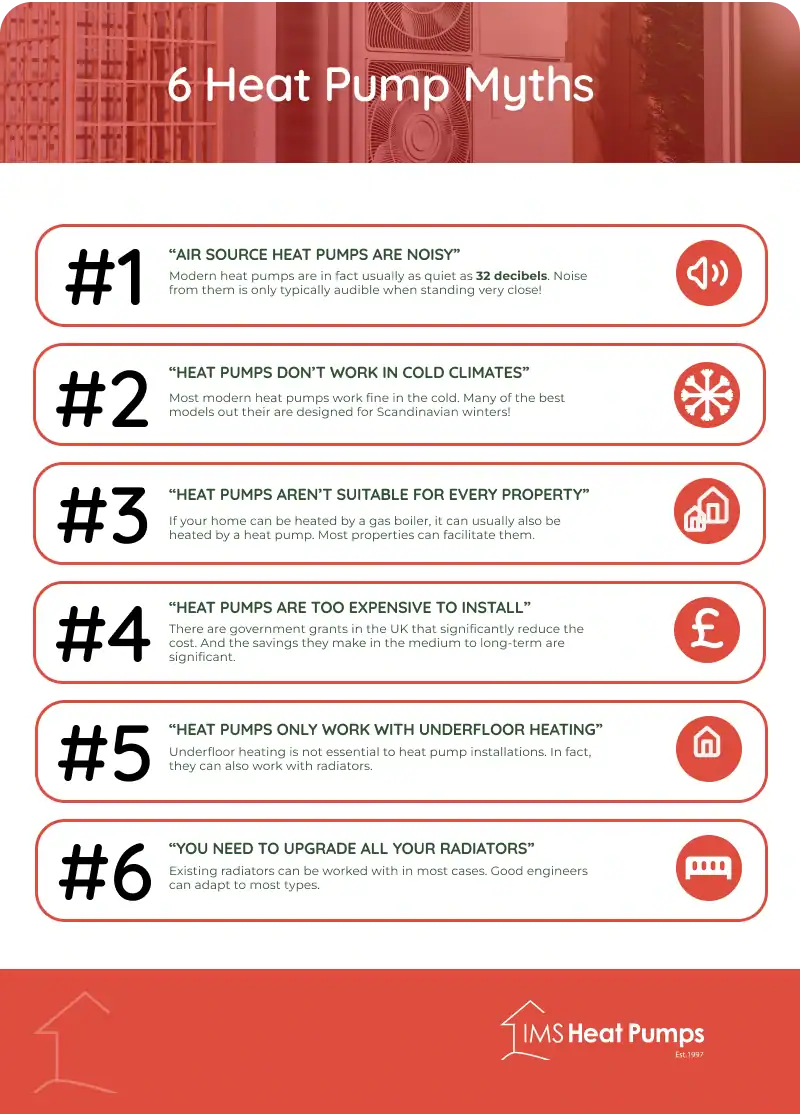
Myth #1: “Air source heat pumps are noisy”
One of the most persistent myths is that heat pumps are noisy.
The reality?
Modern heat pumps are designed to be incredibly quiet.
Air source heat pumps are often compared to the sound of a fridge humming or a small fan running.
Manufacturers like Vaillant have developed heat pumps with sound levels as low as 32 decibels—quieter than a typical conversation!
With advances in technology, the units are quieter than ever. Any noise produced is typically heard only when standing right next to the external unit. Indoors, you won’t hear a thing.
Myth #2: “Heat pumps don’t work in cold climates”
There’s a common belief that heat pumps won’t work in colder climates, especially in the UK where winters can be harsh.
But this couldn’t be further from the truth: Heat pumps are highly effective in cold climates.
In fact, air source heat pumps can extract heat from the air even when temperatures drop to as low as -25°C.
Countries like Sweden and Norway, which experience much colder winters than the UK, have been successfully using heat pumps for decades.
Top Swedish Heat Pump manufacturer NIBE’s heat pumps are specifically designed to operate efficiently in freezing temperatures.
Myth #3: “Heat pumps aren’t suitable for every property”
Heat pumps may not be the perfect solution for every home. But they are suitable for most UK properties.
They can be installed in a wide variety of homes and businesses, from new builds to older properties.
If your home can be heated by a gas boiler, it can usually also be heated by a heat pump.
Improving your home’s insulation to prevent heat loss save you money and reduce carbon emissions now (even with a gas boiler). It will also allow you to use a smaller, more efficient heat pump that costs less to operate.
At IMS Heat Pumps, we’ve installed heat pumps in everything from large country homes and castles to modern new-builds and terraced houses.
(Check out our Case Studies to see how we’ve tailored heat pump installations to suit a variety of property types.)
The installation process differs depending on the type and size of the property. But with proper planning and an expert installer, heat pumps can be tailored to work efficiently in most homes.
Myth #4: “Heat pumps are too expensive to install”
It’s true that the upfront cost of installing a heat pump is higher than a traditional gas boiler, but this myth overlooks some key facts.
Firstly, there are government grants for heat pumps available to help offset installation costs, including:
- In England and Wales, the Boiler Upgrade Scheme (BUS) provides £7,500 towards the installation of both air and ground source heat pumps, helping to make them a more accessible option for homeowners.
- In Scotland, the Home Energy Scotland (HES) Grant and Loan offers up to £7,500 in grants and additional interest-free loans to cover the installation of air and ground source heat pumps. The grant provides £7,500 for both air and ground source heat pumps (an uplift of £1,500 is also available for rural and island homes), plus up to £7,500 in loans to cover any remaining costs.
(Both of these schemes require you to use an MCS-certified installer. In England and Wales, the installer applies for the grant on their customer’s behalf (and deducts it from their invoice). In Scotland, homeowners need to apply themselves.)
Secondly, heat pumps offer significant savings in running costs and energy efficiency over their lifespan.
You’ll likely see lower energy bills and recoup the initial investment over time, especially with energy prices fluctuating.
Plus, their long lifespan (up to 20+ years) make them a sound financial choice in the long run.
Myth #5: “Heat pumps only work with underfloor heating”
Heat pumps work well with underfloor heating and with traditional radiators.
In some cases, your existing radiators may need to be upgraded to larger ones to make the most of the heat pump’s efficiency. But upgrading every radiator is not always necessary.
This is backed by The Heat Pump Association, which confirms that heat pumps can be paired with radiators.
This is particularly true when they are combined with good insulation to keep homes warm at lower flow temperatures.
Myth #6: “You need to upgrade all your radiators”
This myth often goes hand-in-hand with the belief that heat pumps only work well with underfloor heating.
It is true that heat pumps run at lower temperatures than traditional boilers. But in many cases, heat pumps work perfectly fine with your existing radiators.
However, in some older homes or in poorly insulated spaces, upgrading to larger radiators might be recommended to ensure your system runs optimally.
In some homes, small upgrades to radiators might be necessary, but a full replacement isn’t always required.
A professional heat pump installer will assess your home’s heating needs to determine what kind and size heat pump you need. Based on this, they will recommend the best approach.
The truth about heat pumps
Heat pumps are a smart, energy-efficient solution for heating homes and businesses across the UK.
While they may not be as familiar to some as traditional gas boilers, they offer a range of benefits, including:
- Lower carbon emissions
- Long-term cost savings
- Reliable heating—even in the coldest winters.
At IMS Heat Pumps, we’ve been installing heat pumps for over 27 years. We know firsthand how transformative they can be.
If you’re considering making the switch, don’t let these myths hold you back. Get the facts, talk to an expert, and discover how heat pumps can work for your home.
If you have any questions about heat pumps or want to explore whether they’re right for your property, feel free to Contact Us.